Founder-Led vs Founder-Enabled: Key Differences
16 February 2026
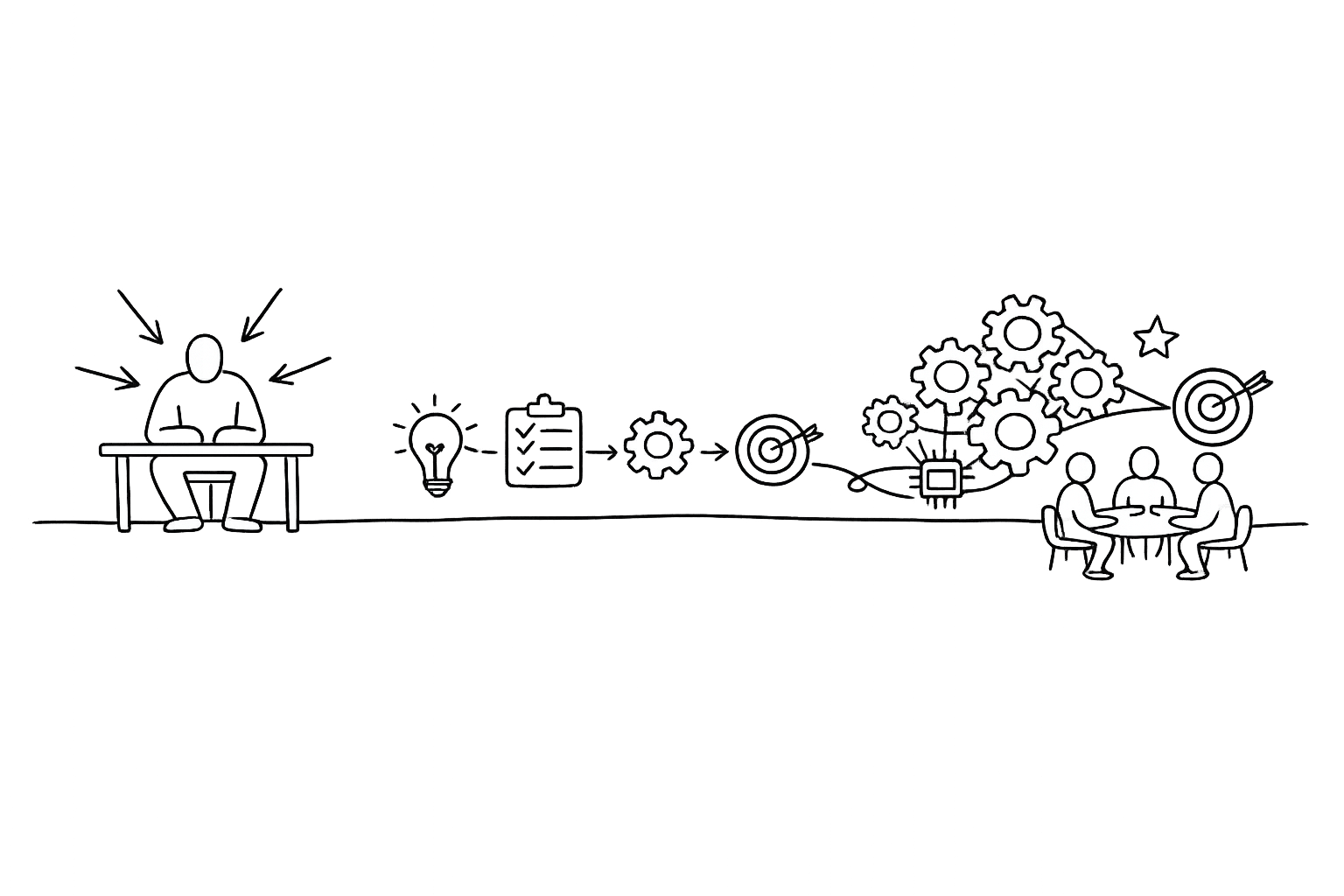
When it comes to running a business, there’s a big difference between being founder-led and founder-enabled. Founder-led businesses rely heavily on the founder for decisions, operations, and growth. This can work well in the early stages but often creates bottlenecks as the business grows. On the other hand, founder-enabled businesses decentralise decision-making, using systems, processes, and empowered teams to operate independently of the founder.
Key Takeaways:
- Founder-Led: The founder is directly involved in almost every decision and task. This limits scalability and makes the business heavily dependent on one person.
- Founder-Enabled: The founder shifts focus to creating systems, frameworks, and leadership teams, enabling the business to grow without their constant input.
Why It Matters:
- Growth: Founder-led businesses often plateau at £1–5m turnover or 10–20 employees due to reliance on the founder.
- Value: Founder-enabled businesses typically achieve higher valuations (6–10x EBITDA) compared to founder-led ones (2–4x EBITDA).
- Scalability: Founder-enabled businesses overcome bottlenecks by decentralising authority and embedding the founder’s expertise into repeatable systems.
Quick Comparison:
| Feature | Founder-Led Model | Founder-Enabled Model |
|---|---|---|
| Decision-Making | Centralised, founder-driven | Distributed, system-based |
| Scalability | Limited by founder’s capacity | Scalable through systems |
| Team Dynamics | Founder-dependent | Empowered and autonomous |
| Valuation | 2–4x EBITDA | 6–10x EBITDA |
The shift from founder-led to founder-enabled isn’t easy, but it’s essential for long-term growth. It involves documenting processes, delegating authority, and building systems that allow the business to thrive without being tied to the founder’s daily involvement.
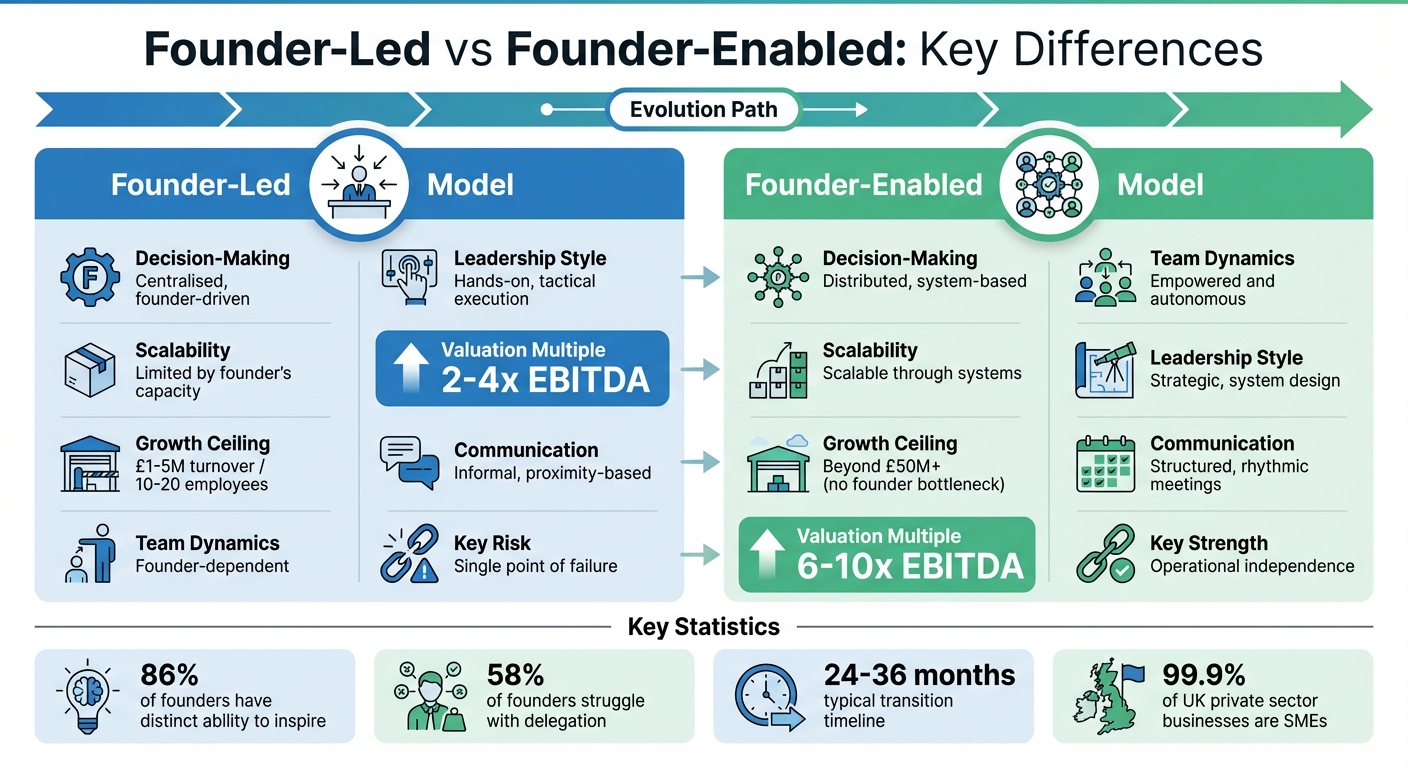
Founder-Led vs Founder-Enabled Business Models: Key Differences and Valuations
From Founder-Led Sales to Systems that Scale with Ken Grosso
sbb-itb-9e8c2f9
What is a Founder-Led Business?
A founder-led business revolves around the founder, with nearly all decisions and operations tied to their involvement. Growth in this model often hinges on the founder’s capacity to manage multiple aspects of the company. From shaping strategy and culture to handling daily operations, the founder remains at the centre of everything. Decisions – big or small – flow directly through them, from hiring to client approvals.
The hallmark of this approach is hands-on leadership. Founders in this model don’t just oversee; they actively participate in the details. Paul Graham, co-founder of Y Combinator, describes this leadership style as "founder mode", where founders bypass conventional management structures and engage directly with employees, often skipping layers of middle management.
"In effect there are two different ways to run a company: founder mode and manager mode. Till now most people… have implicitly assumed that scaling a startup meant switching to manager mode. But we can infer the existence of another mode from the dismay of founders who’ve tried it." – Paul Graham, Co-founder, Y Combinator
Steve Jobs exemplified this at Apple, hosting an annual retreat with the "100 most important people" in the company. These individuals were chosen based on their impact, not their position on the organisational chart. This approach allowed Jobs to steer the culture and maintain influence even as Apple grew. Such examples highlight how founder-led businesses excel in adaptability but often face challenges when scaling.
Main Features of Founder-Led Models
Founder-led businesses stand out due to several defining traits. At their core, the founder embodies the company’s vision and culture, driving progress through personal energy and passion. Research shows that 86% of founders have a distinct ability to inspire others, compared to about two-thirds of non-founder CEOs.
Centralised decision-making is a key feature. Founders often take charge of critical decisions, setting the pace for the organisation. This can lead to a "best operator in the room" dynamic, where the founder steps in to solve problems directly, bypassing established systems.
Another characteristic is vision-driven leadership. Founders rely on their deep, often undocumented expertise – values, instincts, and mental models that guide their decisions. This intuition enables them to make bold, unconventional choices that professional managers might shy away from.
Founders also carry earned legitimacy. Having built the business from scratch, they command a level of trust and authority that can be hard for external executives to match. This often translates into "stakeholder forgiveness", where investors and employees are more forgiving of mistakes or missteps.
These traits define the strengths and challenges of founder-led businesses, shaping how they operate and grow.
Advantages and Disadvantages of Founder-Led Businesses
Founder-led models come with clear benefits, especially in the early stages of growth. One major advantage is quick decision-making. Without the need for lengthy approvals or committee discussions, founders can respond swiftly to market shifts and competitive pressures. This agility often gives them an edge over larger, more bureaucratic organisations.
Another strength is the clear vision and direction provided by the founder’s leadership. With direct control, the company’s strategy stays aligned with its original mission. Founders also bring deep domain expertise, offering an intuitive grasp of their industry that helps them identify opportunities and risks others might overlook.
The model also ensures cultural consistency. With the founder actively involved, the company’s values and working style remain intact. Employees gain clarity on what matters through the founder’s daily actions and decisions.
However, as the business grows, challenges become more apparent. A major issue is limited scalability. Research shows that founder-led businesses often struggle to grow beyond a turnover of £1–5 million or a team size of 10–20 employees. At this point, the founder’s involvement can become a bottleneck.
"The habits that built the business can eventually restrict its ability to scale. When every decision flows through one person, progress slows to that person’s bandwidth." – Savitha, Founder, VentureBean Consulting
This dependency on the founder creates risks. If the business can’t operate without the founder’s constant input, it becomes vulnerable to burnout, illness, or their eventual departure. Talented employees may also grow frustrated if they’re unable to make meaningful decisions, leading to potential turnover.
Another challenge is knowledge transfer. Critical information often resides in the founder’s mind rather than being documented, making it difficult to build systems that support growth. This lack of infrastructure can hinder scalability.
Finally, transitioning from a founder-CEO to a non-founder CEO comes with significant risks. Studies show that such transitions are two to three times more likely to fail or lead to performance declines compared to transitions involving non-founder CEOs. This underscores the fragility of businesses built around a single individual’s skills and presence.
What is a Founder-Enabled Business?
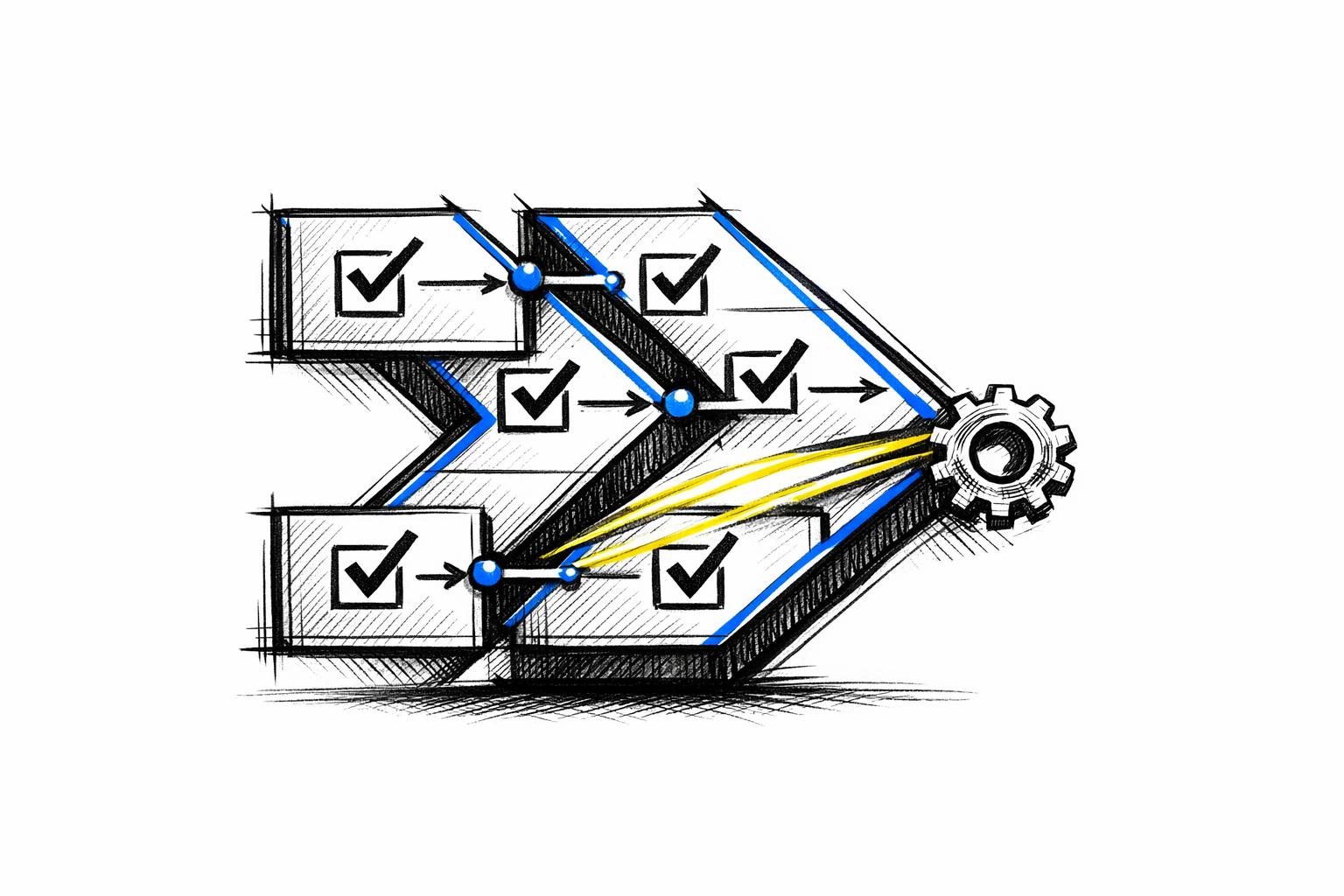
A founder-enabled business flips the traditional model on its head. Instead of relying on the founder’s constant involvement, it runs on well-documented systems, shared knowledge, and empowered teams. The founder’s expertise is captured and embedded into frameworks that the team can use independently. This approach transforms the business from a personal project into a self-sustaining asset, allowing it to grow without being tied to the founder’s daily input.
This shift requires a major change in how founders think about their role. Rather than being the top problem-solver or the "go-to" person, the founder becomes the architect of how work gets done. They focus on designing systems, setting clear decision-making rules, and building the infrastructure that enables their team to act confidently. It’s about scaling judgement, not just effort. The next sections break down the structured components that make this transformation possible.
"Founders create value through personal execution. CEOs create value through systems, clarity, and leverage." – VentureBean Consulting
Unlike founder-led models, where progress often depends on one person, founder-enabled businesses decentralise decision-making. Knowledge moves from the founder’s head into accessible systems like playbooks, decision frameworks, and AI tools that replicate their thought process. Teams are empowered to make decisions closer to the work, guided by clear rules and authority structures. The founder’s role shifts to creating systems that solve recurring problems, rather than addressing each issue themselves.
Core Elements of Founder-Enabled Models
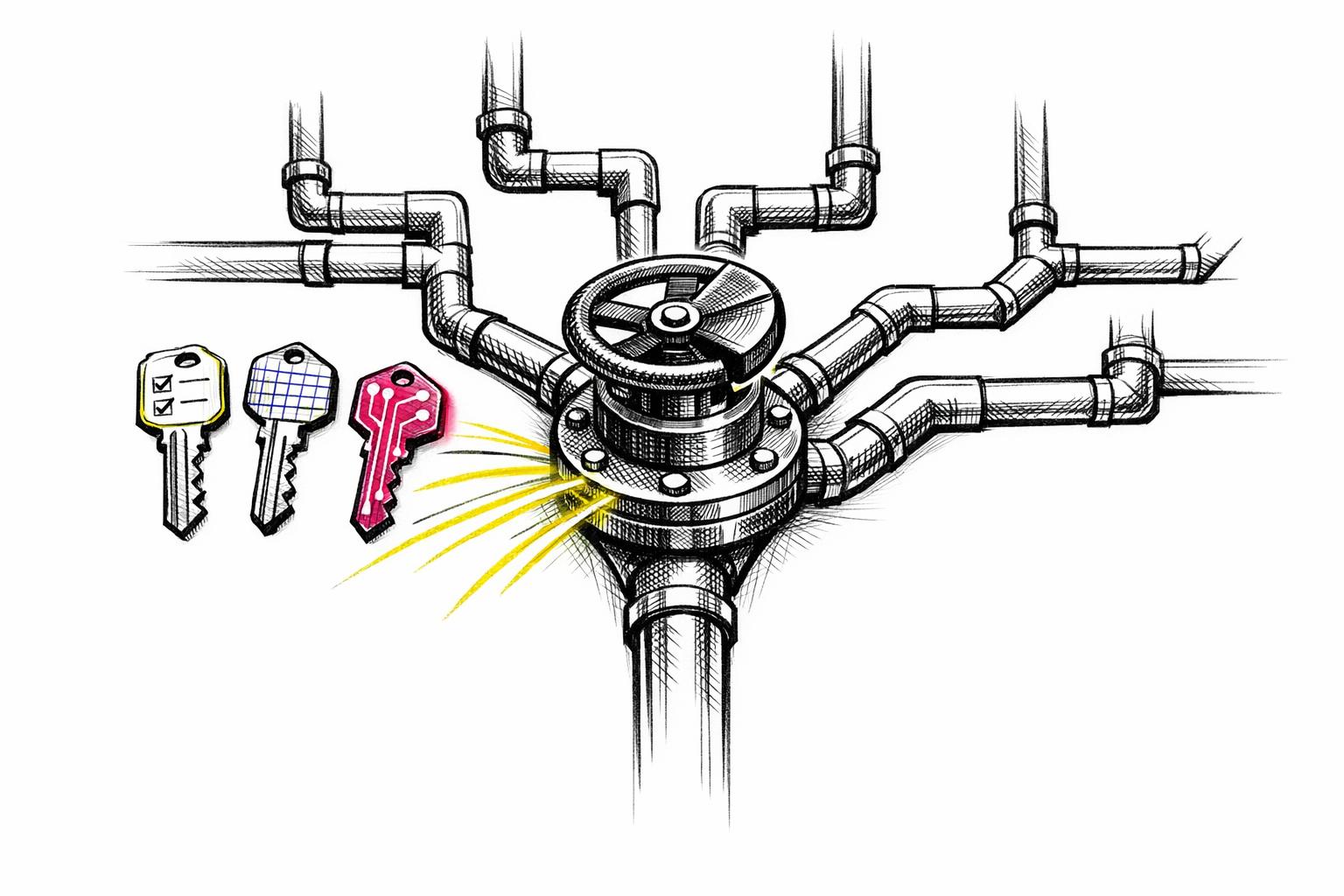
This transformation relies on a structured approach, often referred to as a Founder Operating System (FOS). It’s a combination of mental models, decision frameworks, and operational guardrails that allow teams to act with the same judgement and clarity as the founder would.
"A founder operating system is the structured combination of mental models, decision frameworks, routines, and guardrails by which the founder… executes, delegates, and evolves the brand and business." – RethinkScience
Decision assets are a key part of the system. They document how the founder weighs important trade-offs – like balancing growth with profitability or speed with quality. These rules-of-thumb help teams make decisions independently. A decision log further supports this by recording major choices and their reasoning, creating a searchable history that prevents repeating past mistakes.
Authority ladders clarify decision-making across the organisation. A five-level system can define the autonomy team members have, ranging from "follow instructions exactly" to "act independently." This ensures decisions align with both the stakes involved and the readiness of the individual.
AI tools play a vital role in capturing the founder’s tacit knowledge – unwritten rules, relationship dynamics, and historical context. For example, AI can analyse communication history to identify stakeholder preferences, create "relationship passports" for team members, or build searchable knowledge bases from recorded founder interviews. In the UK, one in six companies already uses AI to streamline operations, with 76% of entrepreneurs reporting that AI has reshaped how they develop products and services.
Delivery assets translate the founder’s methods into repeatable processes. These include tools like client journey maps, quality benchmarks, and facilitation guides to ensure consistent results. Meanwhile, commercial assets – such as sales playbooks, positioning narratives, and objection-handling guides – equip teams to represent the business effectively and confidently.
By replacing "heroic effort" with structured systems, the business can operate smoothly through defined roles and priorities. Tools like weekly operating rhythms, data-driven scorecards, and clear accountability frameworks allow teams to address challenges collectively, rather than escalating every issue to the founder.
Why Founder-Enabled Businesses Work Better
The benefits of this approach become obvious when the structure is in place. Most importantly, growth is no longer limited by the founder’s personal capacity. Founder-led businesses often hit a ceiling at £1–5 million in turnover or 10–20 employees. By decentralising decision-making and execution, founder-enabled businesses can break through these limits.
This model also impacts valuation. Founder-dependent businesses typically sell for 2–4x EBITDA, while team-enabled businesses can command multiples of 6–10x EBITDA or more. Buyers – whether private equity firms, family offices, or strategic acquirers – are willing to pay higher prices for businesses with stable, repeatable, and transferable earnings that don’t rely on the founder’s presence.
"The measure of a successful entrepreneur is not the revenue they generate, but the organisation they leave behind – one capable of generating wealth without them." – Jeff Cunningham, Partner, Bradley
Reducing reliance on the founder also lowers key-person risk. This stability benefits potential buyers and employees alike, as decision-making becomes clearer and teams can operate without constant oversight. Transitioning to a founder-enabled model typically takes 24 to 36 months to build a core executive team capable of running the business independently. In the UK, where 99.9% of private sector businesses are SMEs – most of them founder-led – this shift addresses one of the biggest barriers to sustainable growth: management capacity.
AI further speeds up this transformation. Founders can now manage complex workflows across areas like coding, marketing, and customer service with smaller teams, compressing processes that once took years into just months. By 2030, 75% of startups are expected to be "AI-first", and 71% of founders say AI has already opened up new revenue streams or markets for their businesses.
Founder-Led vs Founder-Enabled: A Direct Comparison
Leadership Structure and Decision-Making
In a founder-led model, the founder tends to dominate decision-making, often bypassing traditional hierarchies entirely. While this approach can be incredibly effective during the early stages of a business, it can lead to bottlenecks as the company grows. Brian Chesky, CEO of Airbnb, captured this challenge perfectly when he said:
"The less hands-on I was, the more I got sucked into problems. And by the time I got sucked into a problem, it was like 10 times as much work".
On the other hand, founder-enabled businesses take a different route by distributing decision-making authority. Leaders in key areas like operations, people, and revenue own specific responsibilities and make decisions within their expertise. Instead of seeking approval for every move, teams operate within documented frameworks and hierarchies. This allows the founder to shift focus – from executing tasks to designing scalable systems for the organisation.
Communication also differs significantly between these models. Founder-led companies often rely on informal, verbal exchanges, with much of the communication happening in close proximity to the founder. Savitha, Founder at VentureBean Consulting, summarised this distinction well:
"Founders create value through personal execution. CEOs create value through systems, clarity, and leverage".
In contrast, founder-enabled businesses establish consistent communication routines – like weekly decision meetings and monthly reviews – that keep the team aligned without constant input from the founder. This evolution from centralised to distributed decision-making is a key factor in scaling a business beyond the limits of a single individual. Next, let’s explore how these structural differences influence operational independence and growth.
Operational Independence and Growth Capacity
Operational independence plays a major role in determining how far a business can scale. In founder-led companies, the growth of the organisation is often tied to the founder’s energy and availability, which naturally limits scalability. These businesses typically hit a growth ceiling somewhere between £5 million and £50 million in revenue, as the founder’s bandwidth becomes a constraint. Additionally, informal communication structures tend to falter as team sizes grow beyond 10 to 20 people.
Founder-enabled businesses, however, overcome these barriers by building systems that allow teams to operate autonomously. By sharing accountability and decision-making, they achieve greater stability and speed. Adam Miron, Author at Founded Partners, explained this shift well:
"The business becomes too complex for one person to sit at the centre".
This operational independence not only supports growth but also improves how the business is perceived in the market. Scalable systems provide a stronger foundation for expansion compared to strategies that rely heavily on the founder. The goal is to move the founder’s role from being the sole source of credibility to serving as a bridge that transfers trust to the broader team and brand.
While founder-led firms often deliver impressive returns – one analysis showed that they contributed 64% of total returns despite making up only 20% of holdings – they come with greater risks. If the founder’s capacity diminishes, the entire business can falter. Founder-enabled models, by decentralising authority, reduce this dependency and foster a more stable environment. This not only benefits employees and customers but also strengthens the company’s long-term growth potential and resilience.
Comparison Table: Main Differences
Here’s a summary of the key contrasts between the two models:
| Feature | Founder-Led Model | Founder-Enabled Model |
|---|---|---|
| Leadership Style | Centralised; founder-driven | Distributed; leadership-led |
| Decision-Making | Bottlenecked at the top; reactive | Distributed to experts; system-based |
| Org Structure | Flat or ignored ("skip-level") | Layered with clear ownership |
| Communication | Informal; proximity-based | Structured; rhythmic (meetings/reviews) |
| Growth Capacity | Limited by founder’s bandwidth | Scalable through autonomous systems |
| Primary Focus | Tactical execution and urgency | Strategic direction and system design |
How to Move from Founder-Led to Founder-Enabled
Transitioning from a founder-led to a founder-enabled model involves practical steps to ensure your business can thrive without relying on you for every decision and action. Here’s how to make that shift effectively.
Step 1: Map Out Critical Founder Knowledge
Start by capturing the unique knowledge that only you, as the founder, possess. This includes not just tasks but the decision-making principles and instincts that guide how you handle clients, resolve issues, and make strategic calls. This "gut feel" is often unwritten but essential for others to understand.
To document this, try scheduling regular 60–90-minute interviews where you explain your thinking. Tools like Otter or Fireflies can record and transcribe these sessions, creating a searchable database of your insights over time. Another option is to use screen recording tools like Loom or Glitter AI. Record yourself performing key tasks – such as onboarding a client or pricing a project – while narrating your thought process. These recordings can double as training materials for your team and input for AI systems.
"Delegation isn’t about letting go. It’s about documentation".
Additionally, establish clear decision hierarchies. Define three levels of authority: Level 1 for tasks your team can handle independently, Level 2 for decisions needing supervisor approval, and Level 3 for strategic choices requiring your input. This structure empowers your team while reducing bottlenecks.
To identify hidden dependencies, consider the "Vanish Test". Step away for five days without contact. When you return, note what stalled or broke – these are the areas that need better documentation or automation before you can fully step back.
Once you’ve mapped your knowledge, the next step is to turn it into systems that your team can use.
Step 2: Create Scalable Systems and AI Tools
With your knowledge documented, the goal is to translate it into scalable systems. This means creating frameworks and tools that allow your team to operate independently.
The CRAFT Cycle offers a simple framework for systemising processes. It includes five steps:
- Clear Picture: Define the process to systemise.
- Realistic Design: Create a minimum viable AI solution.
- AI-ify: Automate the process.
- Feedback: Test and refine the system.
- Team Rollout: Train your team and set up maintenance routines.
"AI offers arbitrage across workflows and gives internal business users technical superpowers".
Start with straightforward, low-risk processes to automate first. This approach minimises disruption while building confidence within your team.
Custom GPTs and AI playbooks can be particularly effective. A custom GPT trained on your decision-making logic allows team members to query it for guidance. AI tools can also analyse historical data – like emails and CRM notes – to extract insights about stakeholder preferences and communication styles.
Once these systems are in place, the focus shifts to training your team to use them effectively.
Step 3: Train Teams and Implement New Systems
The final step is equipping your team with the tools and training they need to operate without your constant involvement. It’s not just about sharing processes – it’s about explaining the reasoning behind them.
The progressive delegation model is a helpful approach:
- You perform the task while your team observes.
- Your team performs the task while you observe.
- Your team performs the task, and you review the outcome.
- Your team owns the task, with you spot-checking occasionally.
When team members seek your input, encourage them to propose options. Ask what they would do and have them present two options with their recommendation. This practice builds their confidence and decision-making skills.
To avoid confusion, use the RACI framework for new processes:
- Responsible: The person doing the work.
- Accountable: The person owning the outcome.
- Consulted: Those providing input.
- Informed: Those who need updates.
Research shows that 58% of founders struggle with delegation, which can limit growth.
"Your role is to design the system, not be the system".
Shift from daily micromanagement to scheduled metrics reviews. Weekly or monthly outcome reviews give your team the freedom to work independently while maintaining accountability.
Transition Table: Benefits and Challenges
| Category | Benefits of Transition | Potential Obstacles/Challenges |
|---|---|---|
| Operations | Consistent quality; faster decision-making | Time investment for documentation; temporary inefficiency during training |
| Team | Increased confidence; clear accountability | Resistance to new systems; fear of mistakes |
| Founder | Reduced burnout; focus on strategy | Difficulty in "letting go"; identity shift |
| Financial | Predictable cashflow; reduced key-person risk | Short-term payroll increases; software costs |
Businesses reliant on founders typically achieve valuations of 2–4× EBITDA, while those with team-enabled models can reach 6–10× EBITDA. Although the transition takes effort, the long-term rewards – scalability, resilience, and increased value – make it worthwhile.
Conclusion: Selecting the Right Model for Your Business
Summary of Main Points
Founder-led models place decision-making and expertise squarely on the founder, while founder-enabled models share these responsibilities across the team. In founder-led businesses, decisions are centralised, often creating bottlenecks that hinge on the founder’s availability and capacity. On the other hand, founder-enabled models decentralise decision-making, leveraging documented systems and AI tools to ensure operations run smoothly without constant founder involvement.
This distinction has a direct impact on business valuation. Founder-dependent models often carry significant risks tied to the reliance on a single individual, which can lower their overall value. By contrast, team-enabled models are more scalable and less reliant on any one person. As Jeff Cunningham, Partner at Bradley, aptly states:
"The measure of a successful entrepreneur is not the revenue they generate, but the organisation they leave behind – one capable of generating wealth without them".
Beyond financial implications, moving to a founder-enabled model alleviates the personal strain of running a business. It reduces decision fatigue and allows founders to reclaim their time, shifting their role from being deeply involved in daily operations to focusing on long-term growth and scalability. While this transition often takes 24 to 36 months to fully implement, the payoff is a business that can expand both geographically and operationally without being limited by the founder’s direct involvement.
Next Steps for Business Owners
To move forward, start by assessing your current position. If your team depends heavily on your input for daily decisions, it’s time to capture and document your critical knowledge. This process begins with articulating the decision-making principles and instincts unique to you, ensuring they can be operationalised.
Next, focus on designing scalable systems that empower your team to work independently. This involves creating clear standard operating procedures, defining decision-making hierarchies, and exploring tools like custom GPTs or AI platforms to embed your expertise into the organisation. As Yiuwin Tsang from Hello Disruptive puts it:
"If you delegate tasks, you stay in the loop. If you delegate outcomes, you build scale".
The objective isn’t to remove yourself entirely but to build a framework where your influence and vision extend far beyond your direct involvement. By doing so, you create a business that’s resilient, scalable, and capable of thriving regardless of your day-to-day presence.
FAQs
How do I know if my business is still founder-led?
A business is considered founder-led when the founder maintains substantial control over major decisions, including hiring, budgeting, or overall strategy. In this model, teams often depend on the founder’s approval for critical choices. If the founder is still deeply involved in day-to-day operations, managing key relationships, or driving customer acquisition, it highlights a hands-on leadership style. On the other hand, when leadership responsibilities are handed over to a management team, the business transitions towards a more scalable, founder-enabled framework.
What’s the first system I should document to reduce founder dependency?
Start with your operational system. The goal here is to create clear, repeatable processes for essential business activities. Why? Because predictable workflows make it easier to delegate tasks and achieve consistent results.
Begin by identifying the critical daily operations that keep your business running smoothly. Once you’ve pinpointed these, develop standard operating procedures (SOPs) for each task. SOPs act as a guide, ensuring everyone knows exactly how to perform specific duties.
This approach not only reduces the dependency on the founder but also makes delegation more effective. Plus, it lays a solid foundation for growth that can scale without chaos.
Which AI tasks help transfer founder knowledge fastest?
AI tools that accelerate the transfer of founder knowledge are those that focus on preserving organisational memory, mapping out relationships, and documenting decision-making processes. This includes capturing the founder’s expertise, outlining workflows, and identifying key connections. By creating structured knowledge repositories and automating documentation, these tools help safeguard critical information. They also streamline onboarding and delegation, allowing new leaders or team members to quickly align with the founder’s methods and efficiently scale operations.
Related Blog Posts
Create the Flexibilty You've Always Craved
Reclaim control and build real independence.
We respect your inbox. No spam, just meaningful updates.